

Best AI Observability Tools in 2026: 8 Tools Compared
Eight LLM and AI agent observability platforms compared: what each tracks, pricing and free tiers, self-hosting options, and who each is built for.

Sejal Pandey

Cloud Cost Management for Observability: A Practical Guide
Observability spend is outgrowing infrastructure budgets. What drives the cost up, how pricing models work, and a practical framework to manage it.
Sejal Pandey
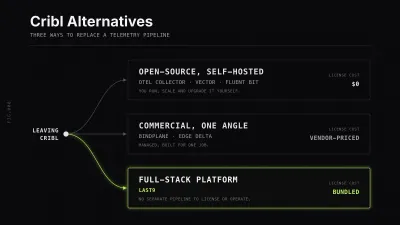
6 Cribl Alternatives Worth Evaluating in 2026
Cribl's credit pricing and setup complexity send teams looking elsewhere. Compare 6 real Cribl competitors and alternatives, for observability and SecOps.
Sejal Pandey
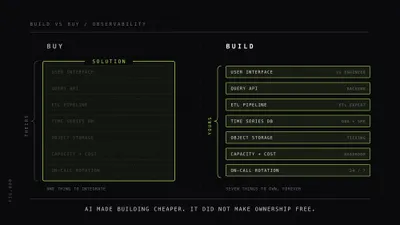
Why you should (not) build your own observability stack
If you are able to build it better than your vendor, then change your vendor. Not build it.

Rishi Agrawal
Incident Response Automation: A Practical Playbook
A stage-by-stage playbook for automating incident response: what to automate at detection, triage, and remediation, what to deliberately leave manual, and a checklist to run against your current setup.
Sejal Pandey
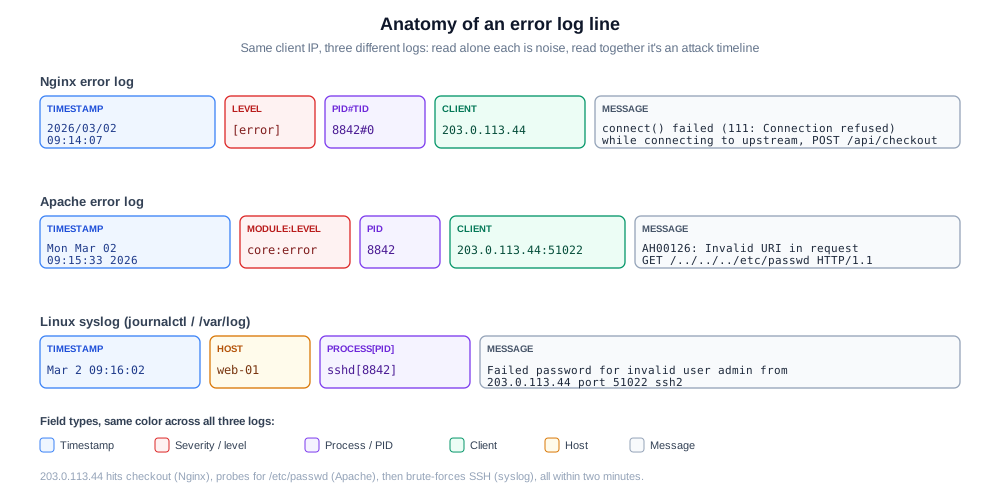
Reading Application Error Logs: Nginx, Apache & System Logs
A quick-reference guide to reading Nginx, Apache, and Linux syslog error lines: what each field means, with real annotated examples.
Sejal Pandey
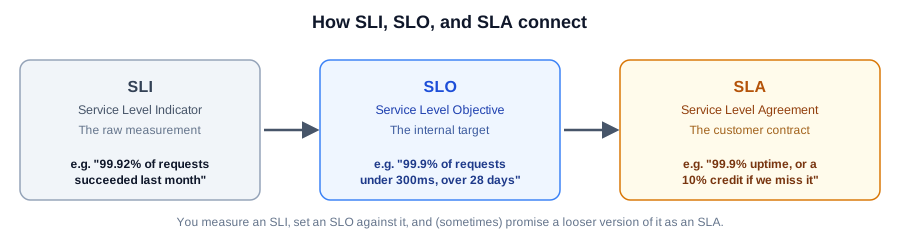
SLO vs SLA: What's the Difference?
An SLO is the internal reliability target your team sets. An SLA is the contractual promise you make to a customer. Here's how they differ, with real examples.
Sejal Pandey
Better Together: Last9 + Altinity
Last9 and Altinity now run observability entirely in your own cloud, metrics, logs, traces, and profiles on an open-source ClickHouse stack, priced on capacity instead of ingestion, with Altinity operating the database so your team doesn't have to.

Last9

High Cardinality in ClickHouse at Scale: What Actually Breaks
ClickHouse swallows high-cardinality telemetry at ingest, then breaks at query time weeks later. Here is what fails, and how we keep it fast in production.

Prathamesh Sonpatki